
California cats • Dental terms and continuing care

Choose a California cat policy for the care that matters

A low cat premium is only one part of the choice. Check how the offered California contract handles feline dental illness and repeated eligible care.

Owner sitting on the floor beside a black cat at home
✓ Policy-first ✓ Independent ✓ Useful checks
Direct answer
For a cat in California, shortlist policies that fit the cat’s existing history, dental needs and the way you want to share future medical costs. Pets Best is another lead in California’s regulator directory. The best fit is conditional on the actual feline offer; no one brand is proved best for every California cat.
Cost & value

Give a small premium difference the right weight

Start with your veterinarian’s description of existing findings and routine care needs. Then write down which future, as-yet-unexcluded medical costs you want help funding. Do not use an indoor lifestyle as evidence that a cat cannot develop illness. Nor should the absence of a formal diagnosis be treated as proof that earlier signs are irrelevant to underwriting.

Cornell’s feline guidance explains that urinary signs can have several causes. That makes accurate history useful when asking the insurer how a prior episode would be treated. It does not let this guide determine that the next episode will qualify. A cat unable to pass urine needs urgent veterinary attention; do not wait for an insurance decision.

Feline selection issue What to obtain What not to infer
Past symptoms The insurer’s explanation of its history rules No diagnosis means no pre-existing issue
Dental illness The exact covered services and restrictions A cleaning allowance includes all dental treatment
Repeated treatment Deductible reset and condition definitions Every later visit starts a new condition
California offer State form and selected options A national comparison describes your contract
What to know

Use California’s disclosure as the feline-policy reading map

California Insurance Code section 12880.2 requires a separate “Insurer Disclosure of Important Policy Provisions.” It includes relevant exclusions and limitations; the law also requires disclosure of the claim-payment basis. Ask for that document alongside the cat’s offered policy. Mark where it addresses chronic conditions, hereditary findings, deductible and limits before comparing a broad illness label.

For a new policy, read the return notice when you receive it. The statutory free-look period is at least 30 days, and a qualifying return voids the policy from its beginning. If the insurer has paid a claim or told you in writing that one will be paid, the special free-look refund right does not apply; the policy’s cancellation provisions govern the refund instead.

Use the review window to check the actual dental selection and cost-sharing arrangement promptly. Do not plan to obtain care and then assume you can return the contract for a full refund. Ask the insurer or California’s insurance department about an unclear notice.

Quotes

Dental disease is a separate selection decision

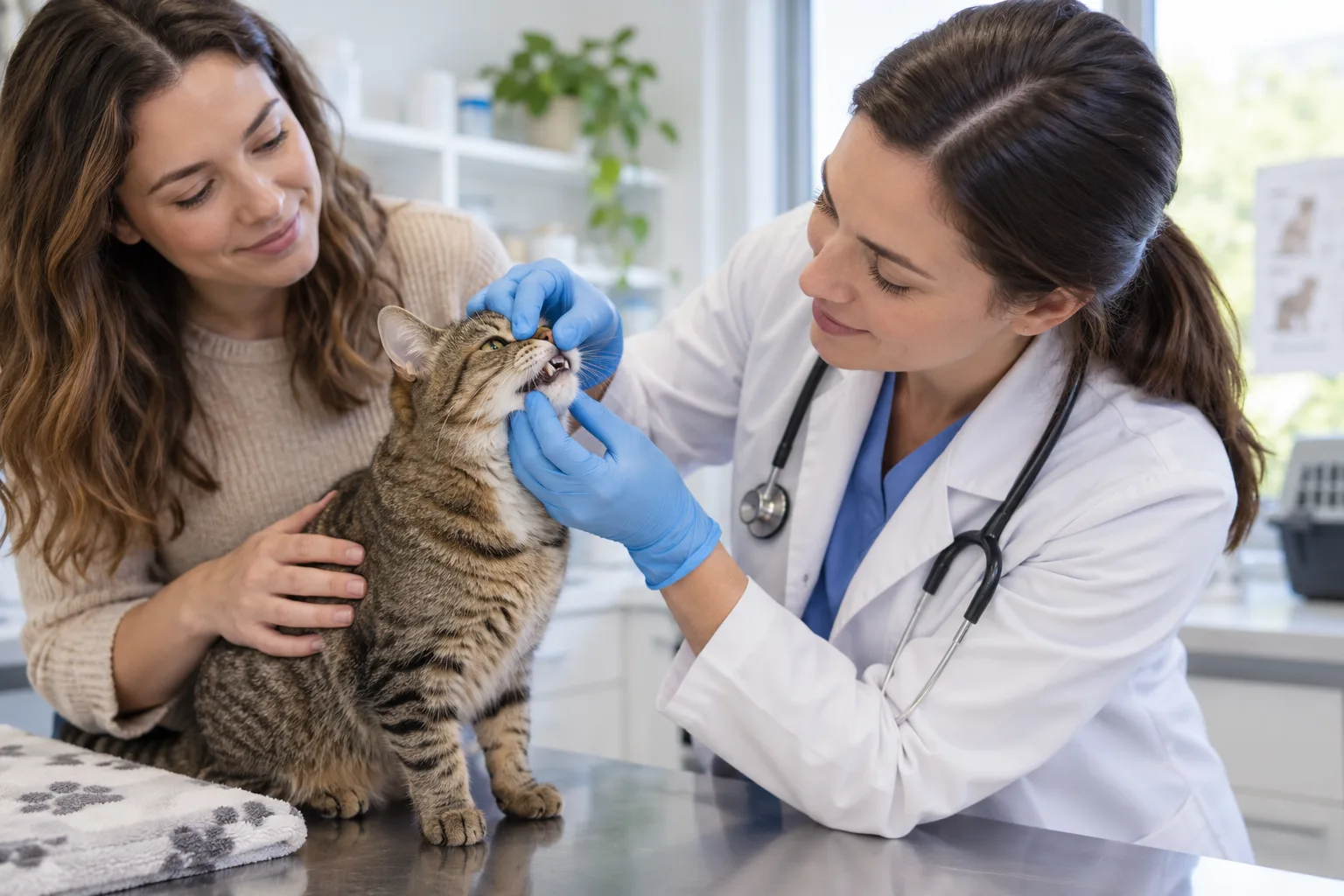
Veterinary professional examining a cat’s mouth with its owner nearby
Dental illness and routine cleaning are different benefit questions.

Cornell describes problems such as periodontal disease and tooth resorption in cats. These are useful reasons to read dental provisions, not a prediction that your cat will need a particular procedure. The medical decision belongs with the veterinarian; the insurance question is which part of recommended care would be eligible.

Ask separately about diagnostic dental imaging, an extraction for illness, treatment of an injured tooth and a routine cleaning. Read any maintenance, prior-disease and service-limit conditions. A policy might describe dental illness while placing conditions on particular charges; a preventive allowance solves a different budgeting problem.

Pets Best’s current overview describes dental benefits with state and enrollment qualifications. Use those descriptions to request the right California documents, not to assume the same dental arrangement is included in every quote. If dental protection is the deciding feature, do not leave this row at “probably covered.”

Policy mechanics

Choose a deductible structure with recurrence in mind

Route to investigate Reason it may fit Trade-off to examine
Trupanion California offer Lifetime per-condition deductible for eligible continuing conditions Separate unrelated conditions can create separate deductibles.
Pets Best directory lead Current coverage overview includes feline medical and dental questions Confirm today’s California offering, issuer and enrollment-version provisions.

Do not compare an annual deductible and a per-condition deductible as though equal dollar labels mean equal exposure. Consider a continuing eligible illness over more than one term, then consider unrelated problems within one term. Either design can look preferable under a different pattern. This is a comparison of contract mechanics, not a forecast of the cat’s health.

Keep the premium and all other terms in the decision. A deductible pattern that looks helpful can be outweighed by excluded care, a service cap or a price you cannot sustain. There is no claim here that one structure produces greater lifetime savings.

What to know

Verify the company and preserve continuity

California’s insurance department provides buying questions and a directory linking plan names to underwriting-company profiles. Use the legal insurer printed on the current offer when checking that information. The directory is a starting point, not a promise that a listed brand offers every form to every cat today.

If you are considering a replacement policy, compare the existing cat policy first. Ask what happens to prior dental findings, urinary episodes and other recorded signs under the new application. Do not cancel the old contract merely because a quote arrives or because a new product advertises a broader category.

For a first policy, finish with the actual selected benefits, exclusions you have been told about, start rules, deductible basis, price and funding plan. The final choice should explain what it does for this cat in California, while keeping routine care and any known excluded problem in your household budget.

Evidence

Sources and policy context

These public references support the consumer or veterinary context. Named insurer details were checked in official product materials; the policy offered for your pet and state determines the actual terms.

Next step

Compare Current Pet Insurance Rates

Check current options for your pet and location, then compare the policy details, exclusions, costs, and eligibility before choosing.

Compare the policy before you choose Check the actual offer, exclusions and out-of-pocket terms.
See Rate Options